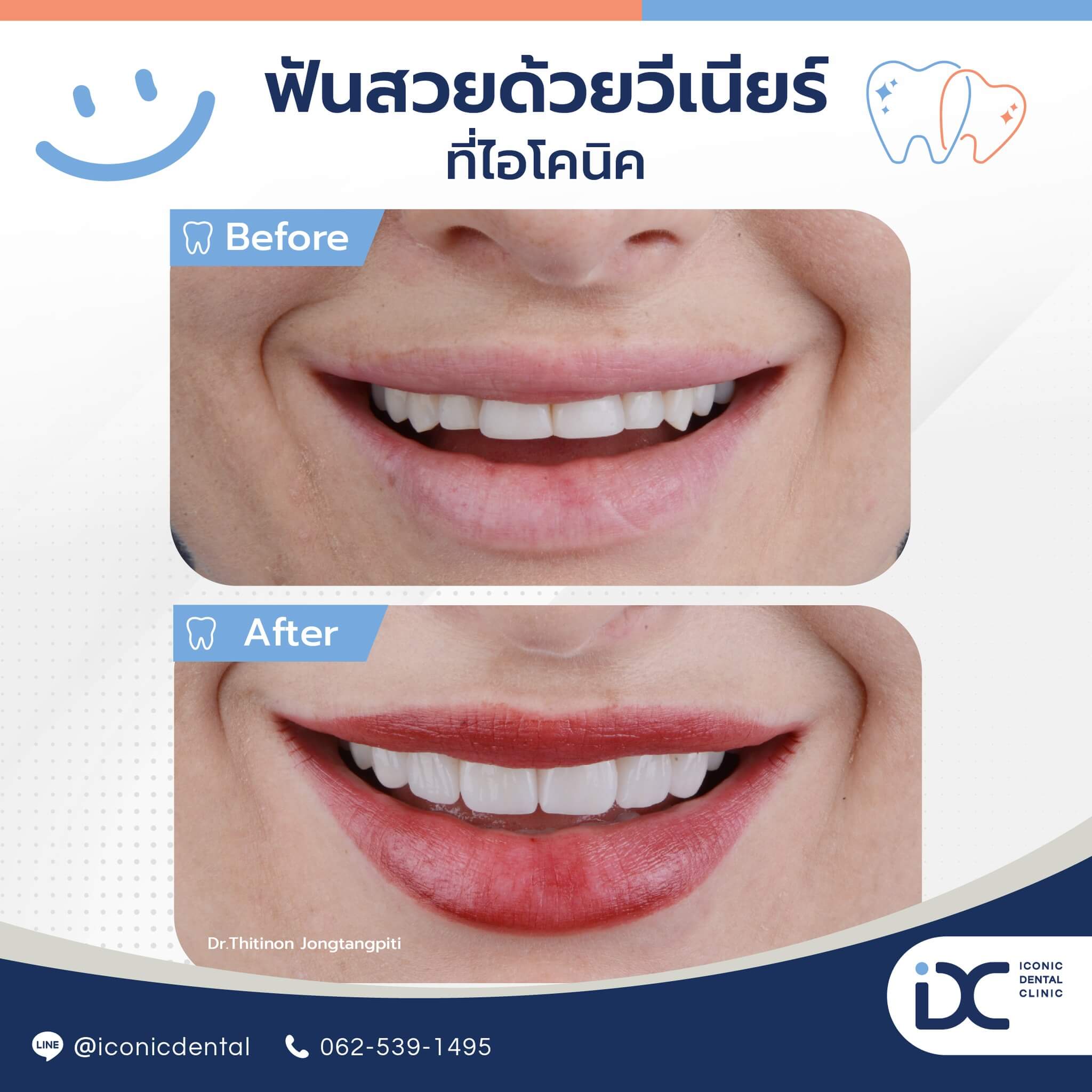
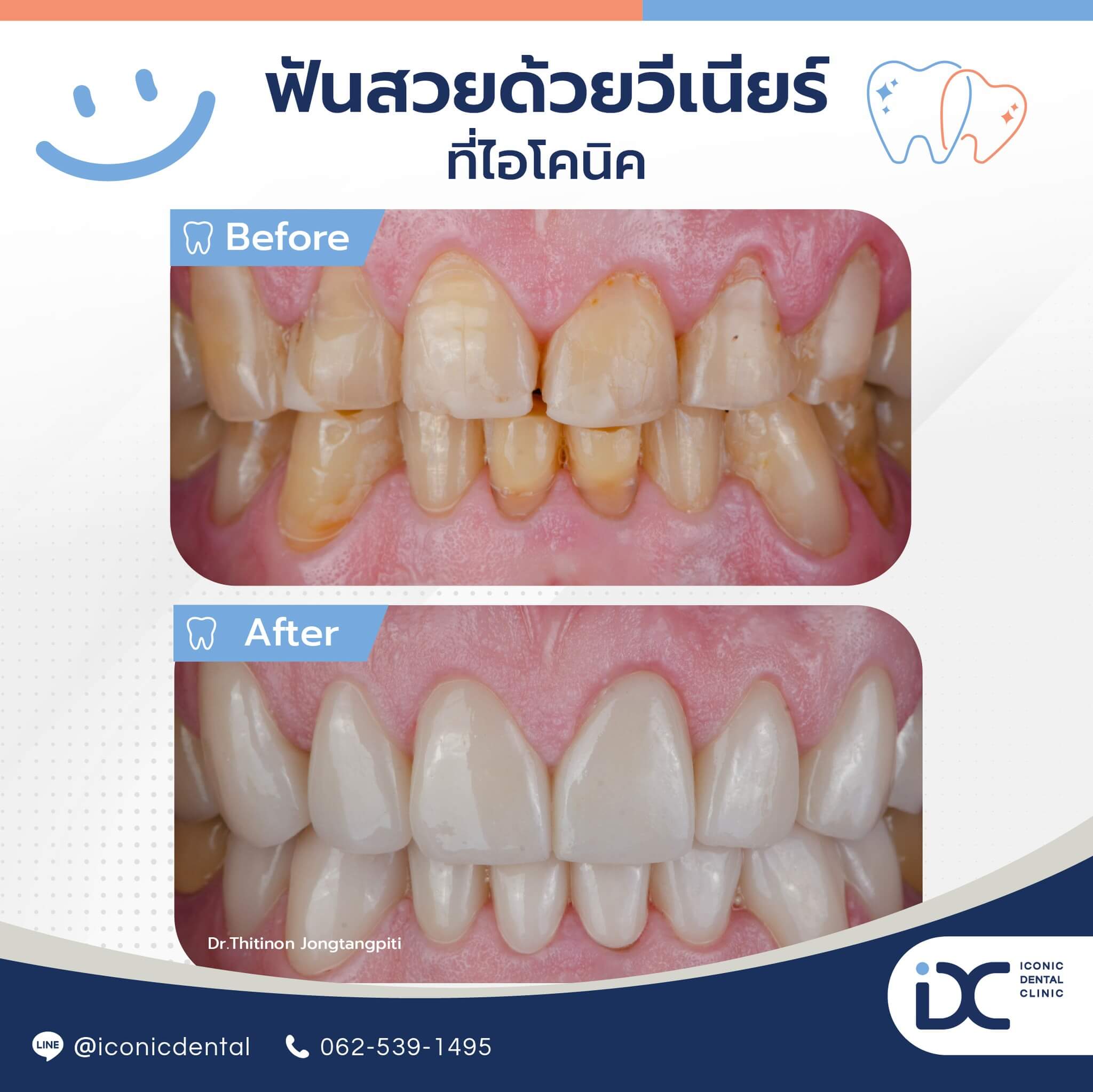
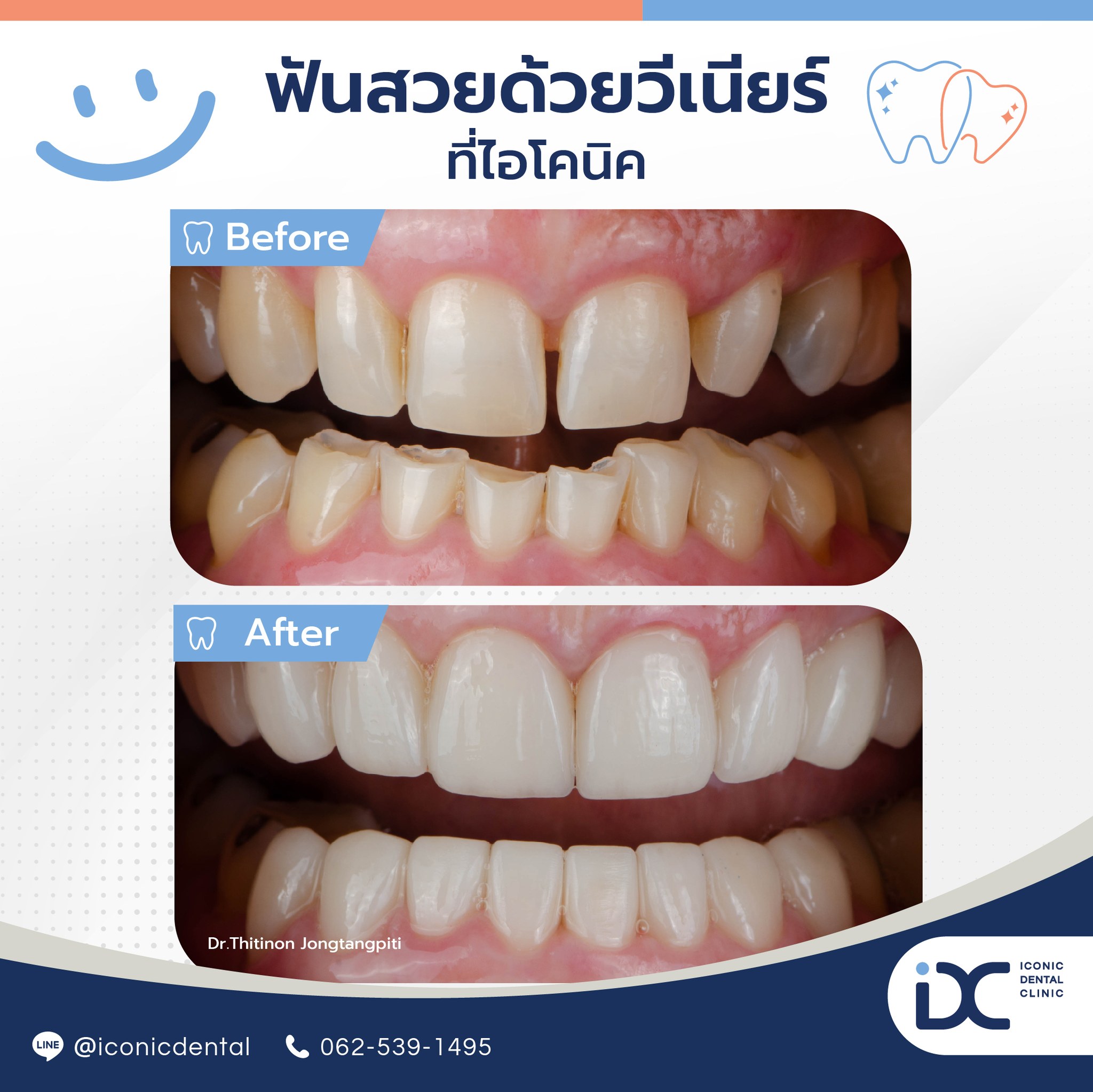
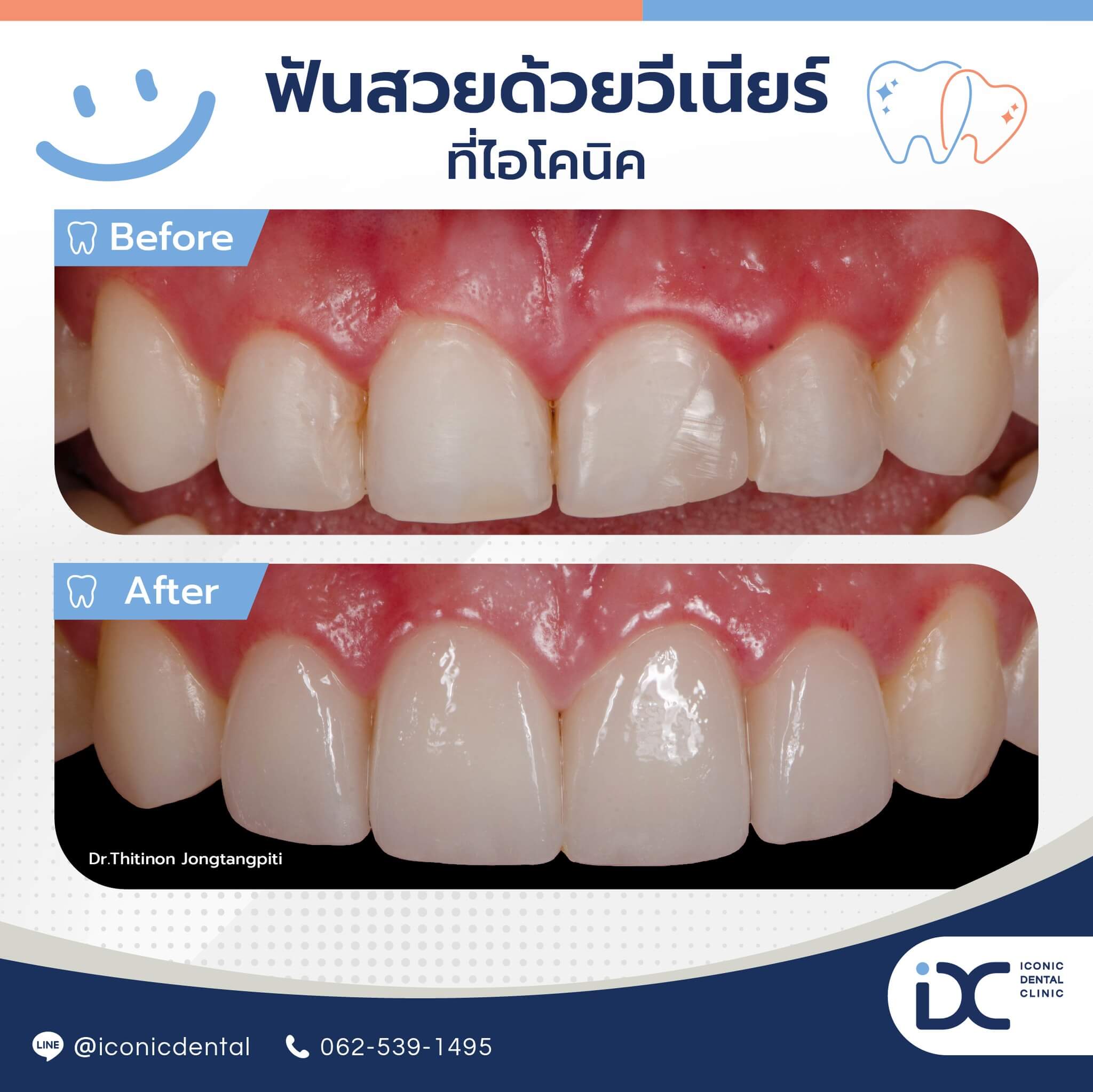
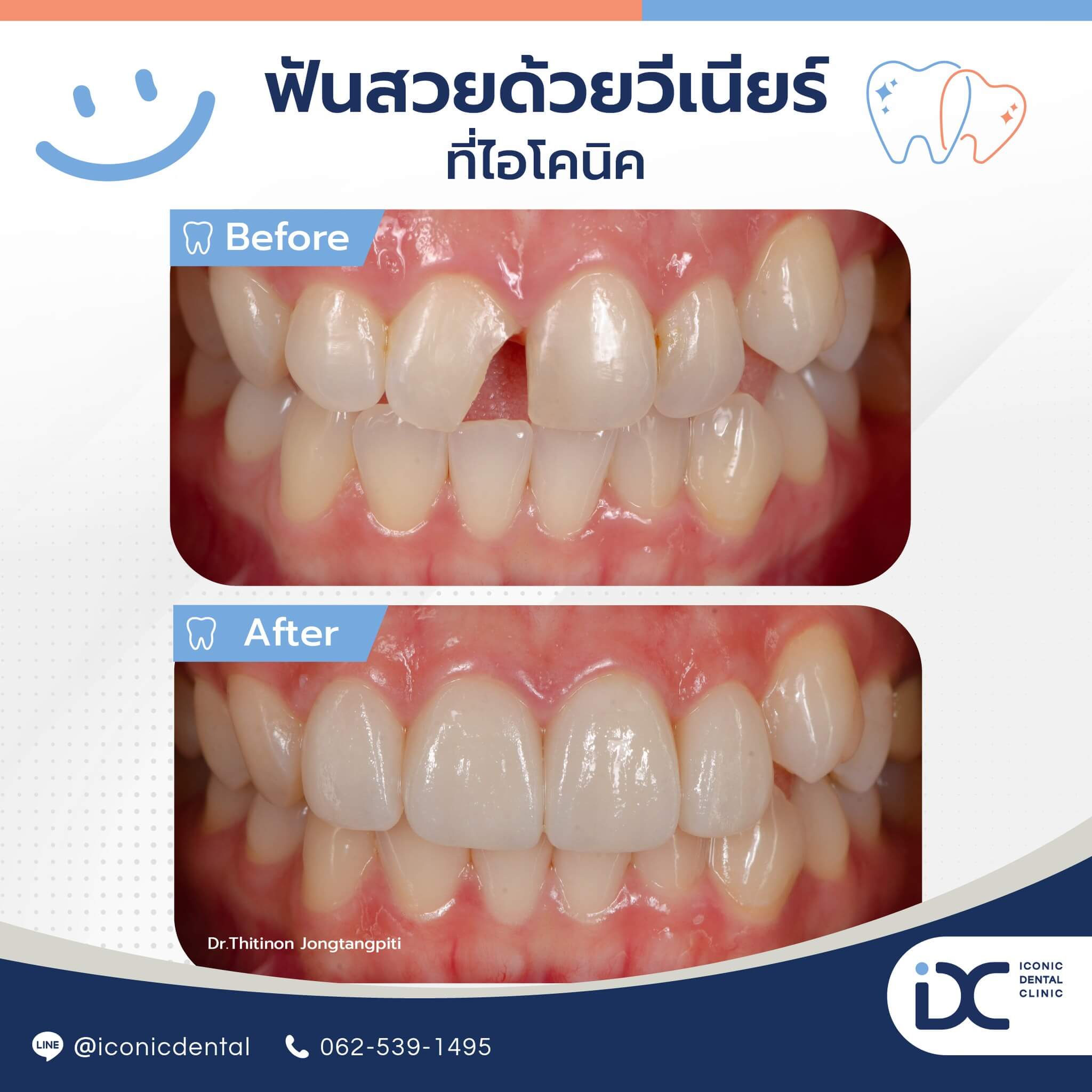
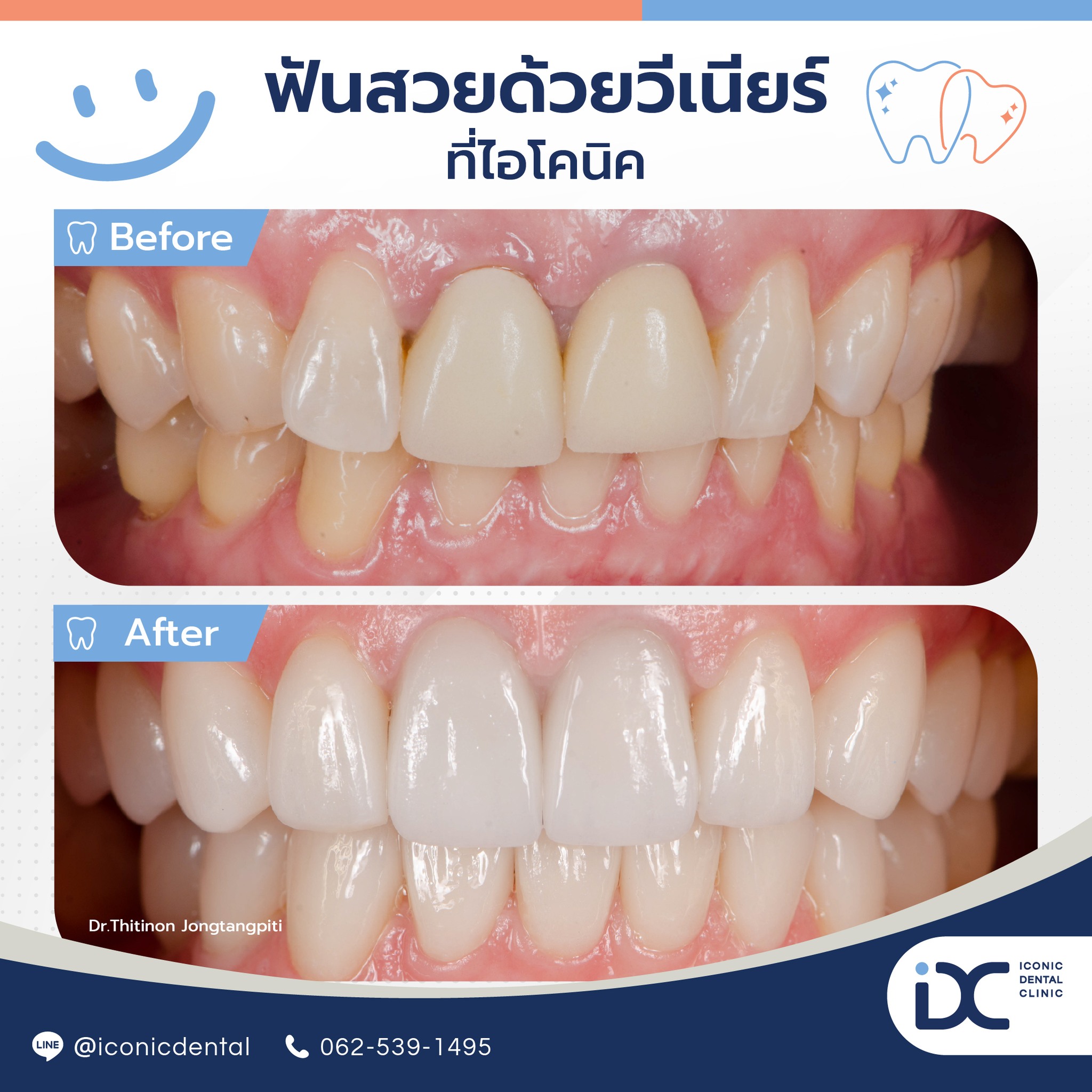
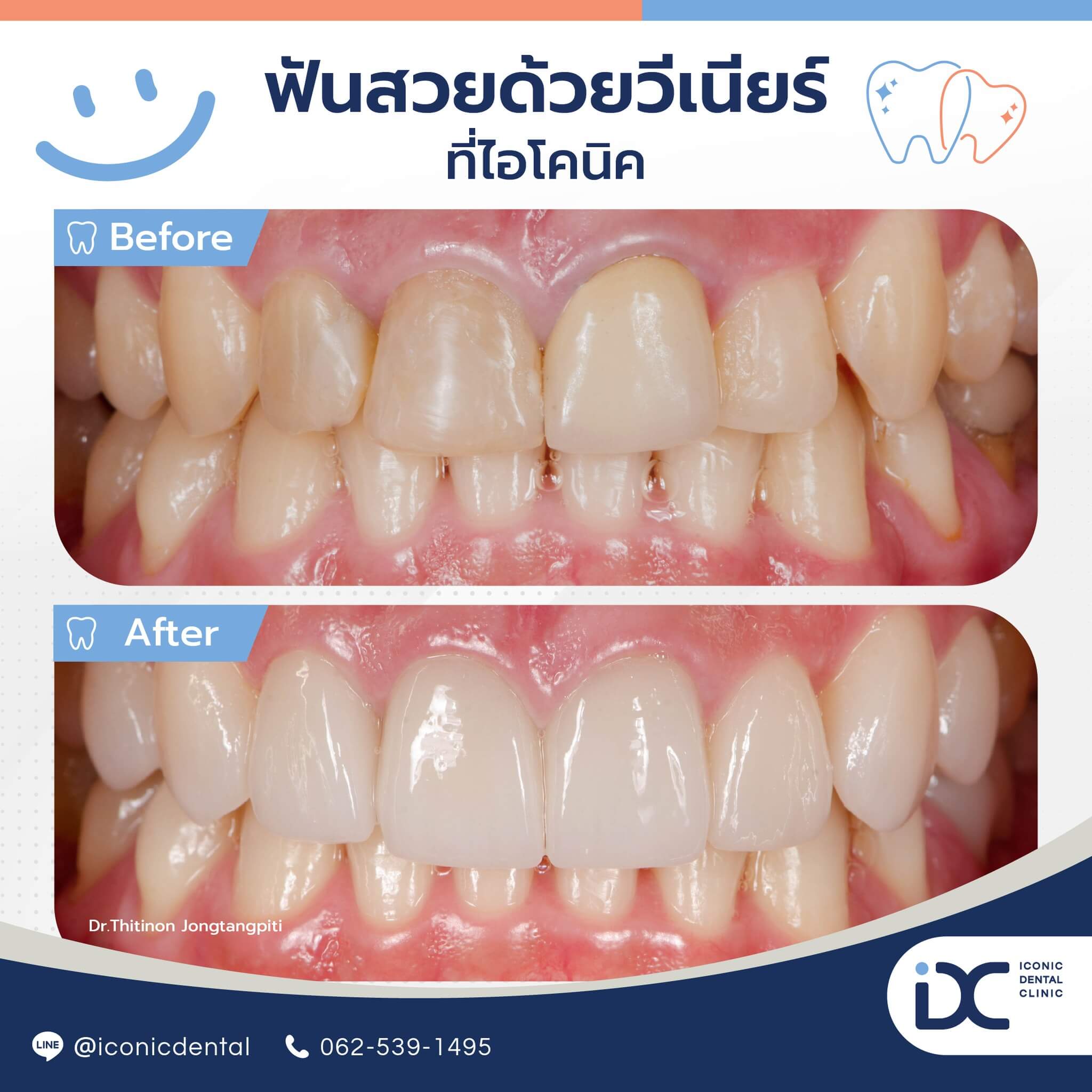
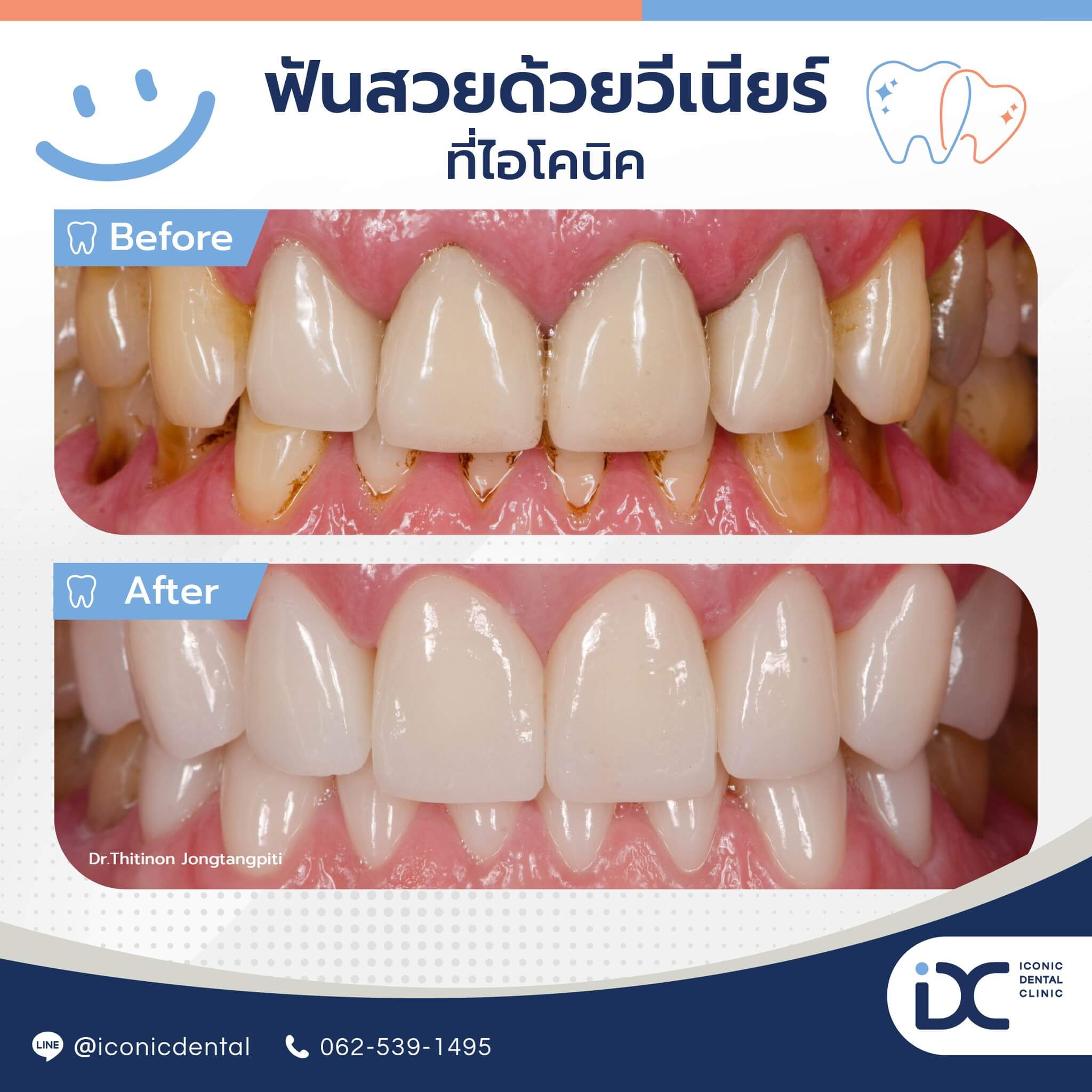
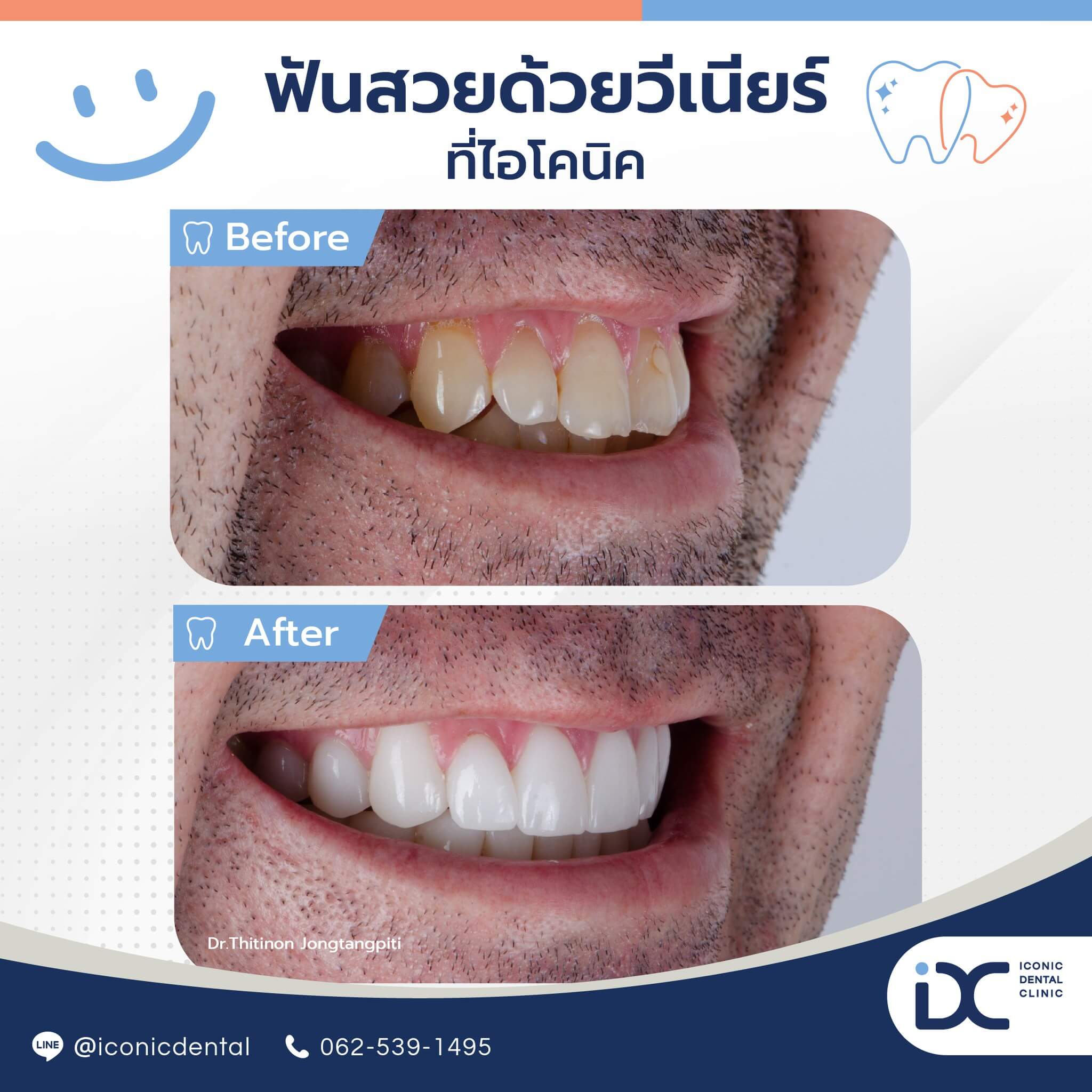
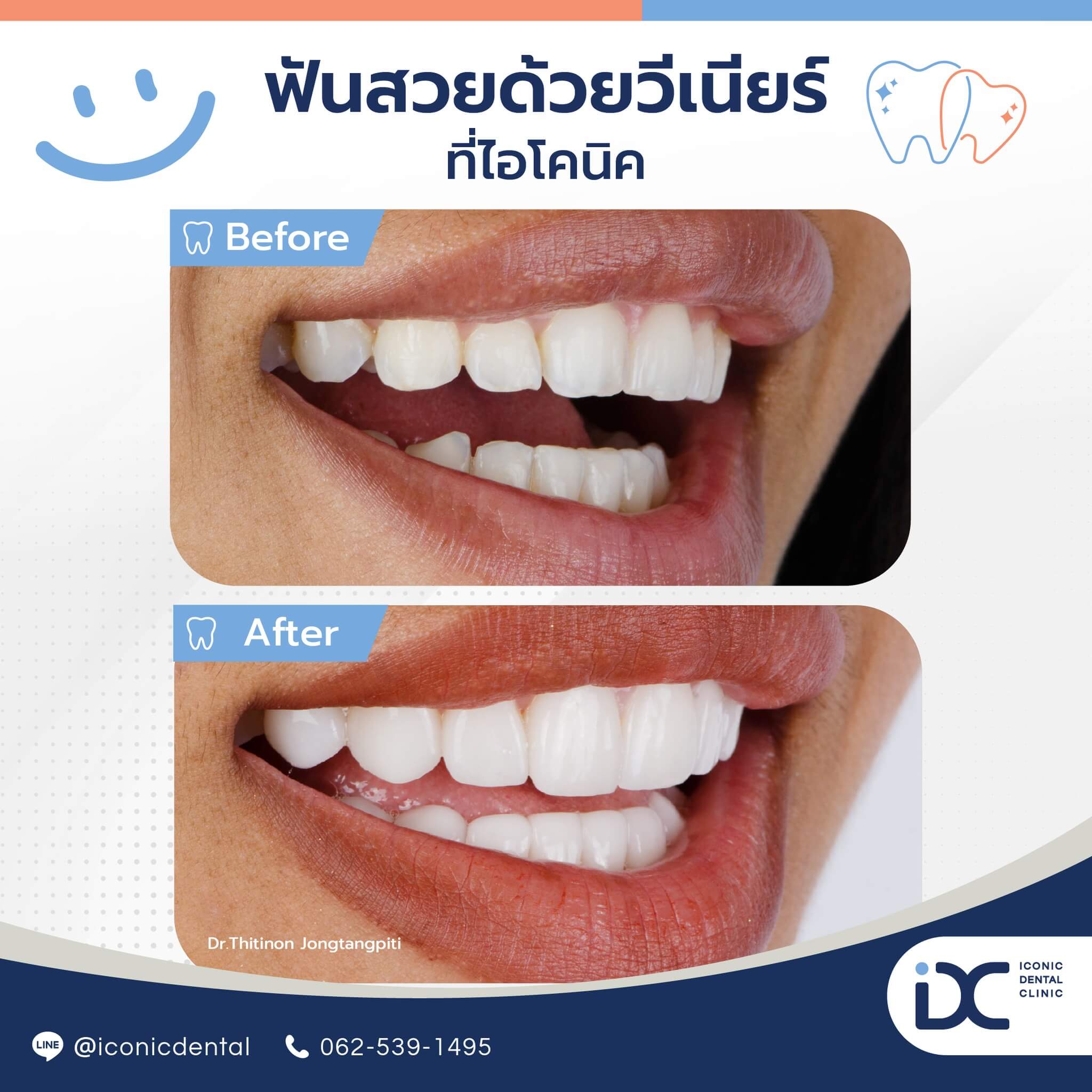
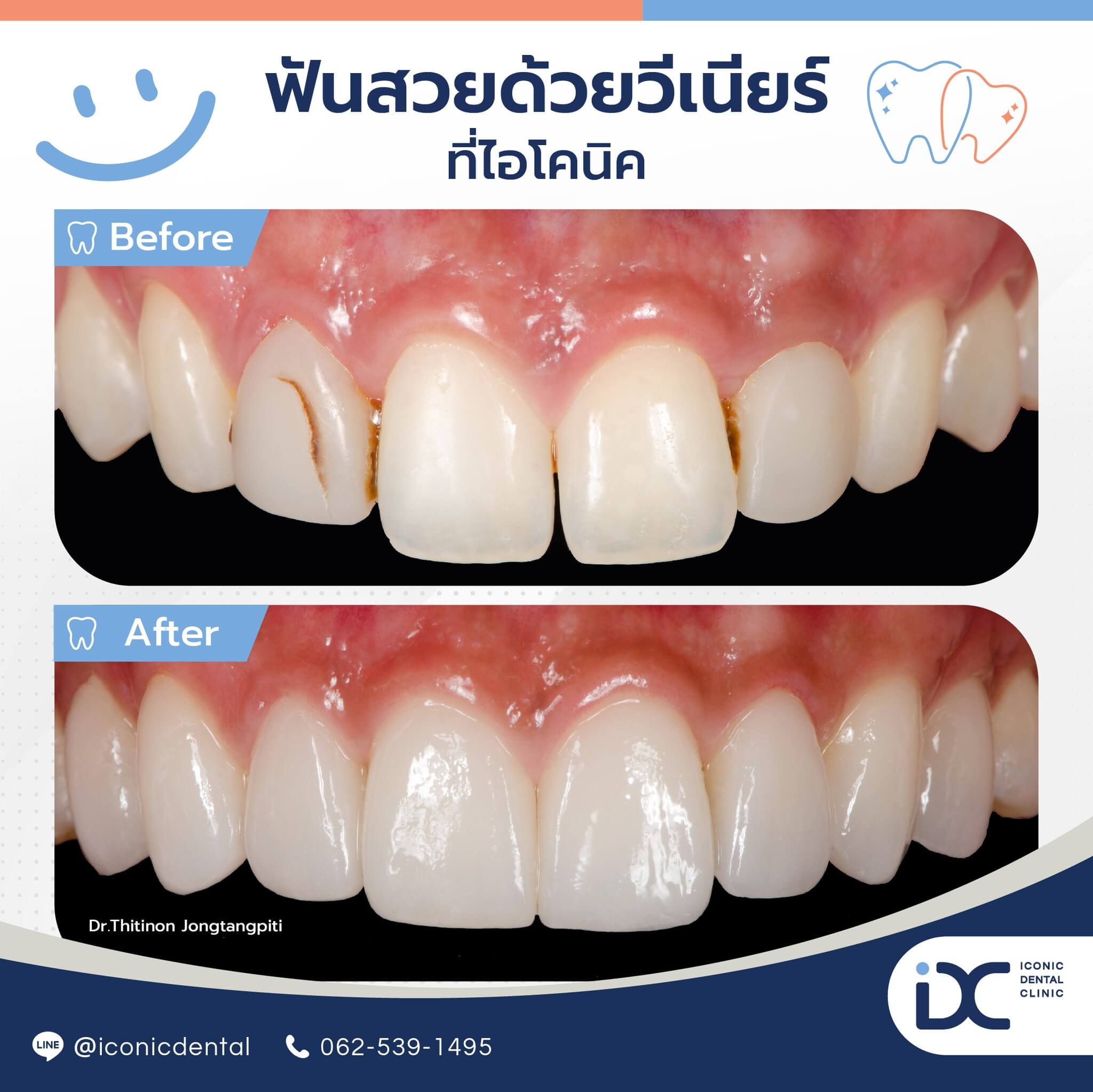
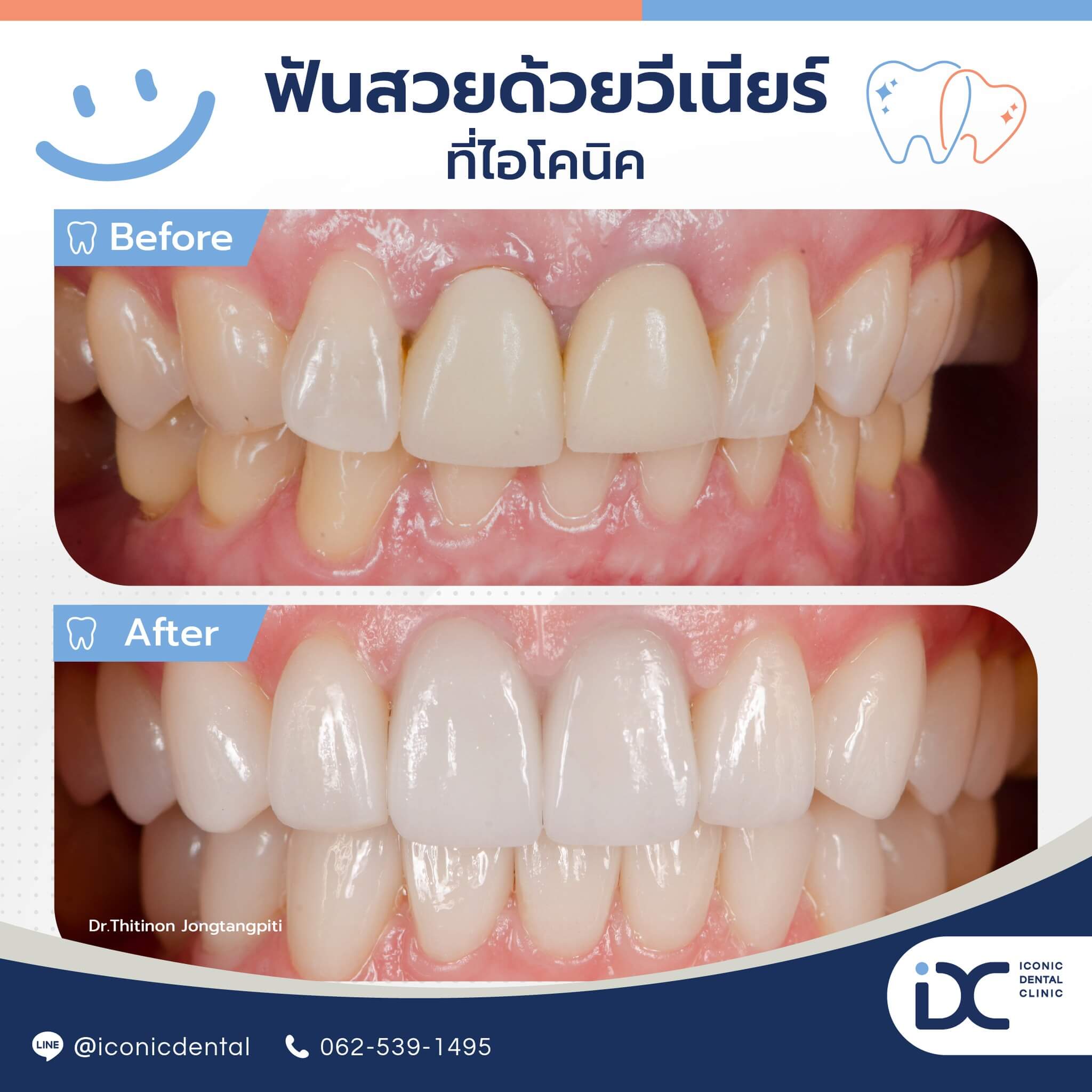
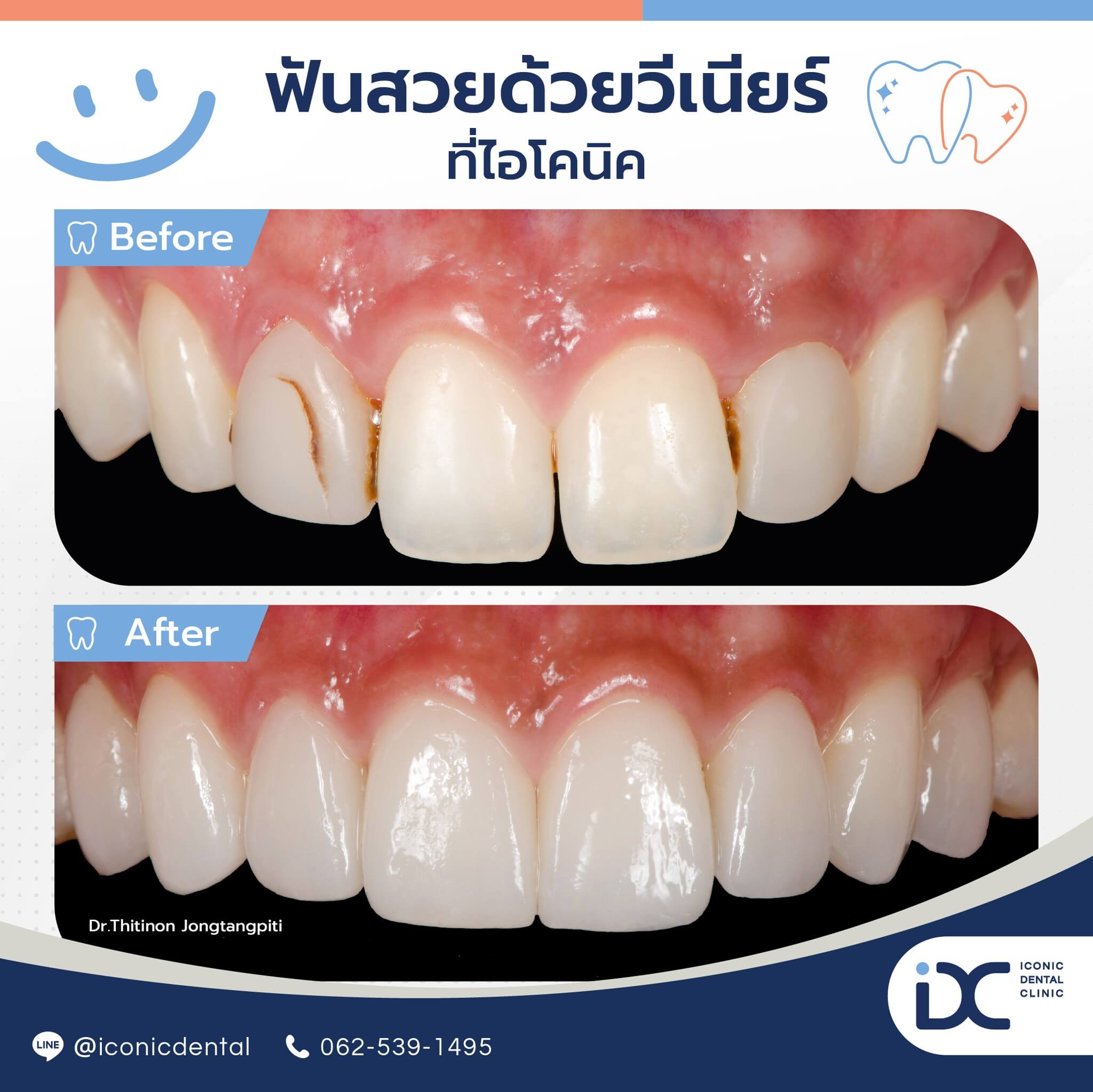
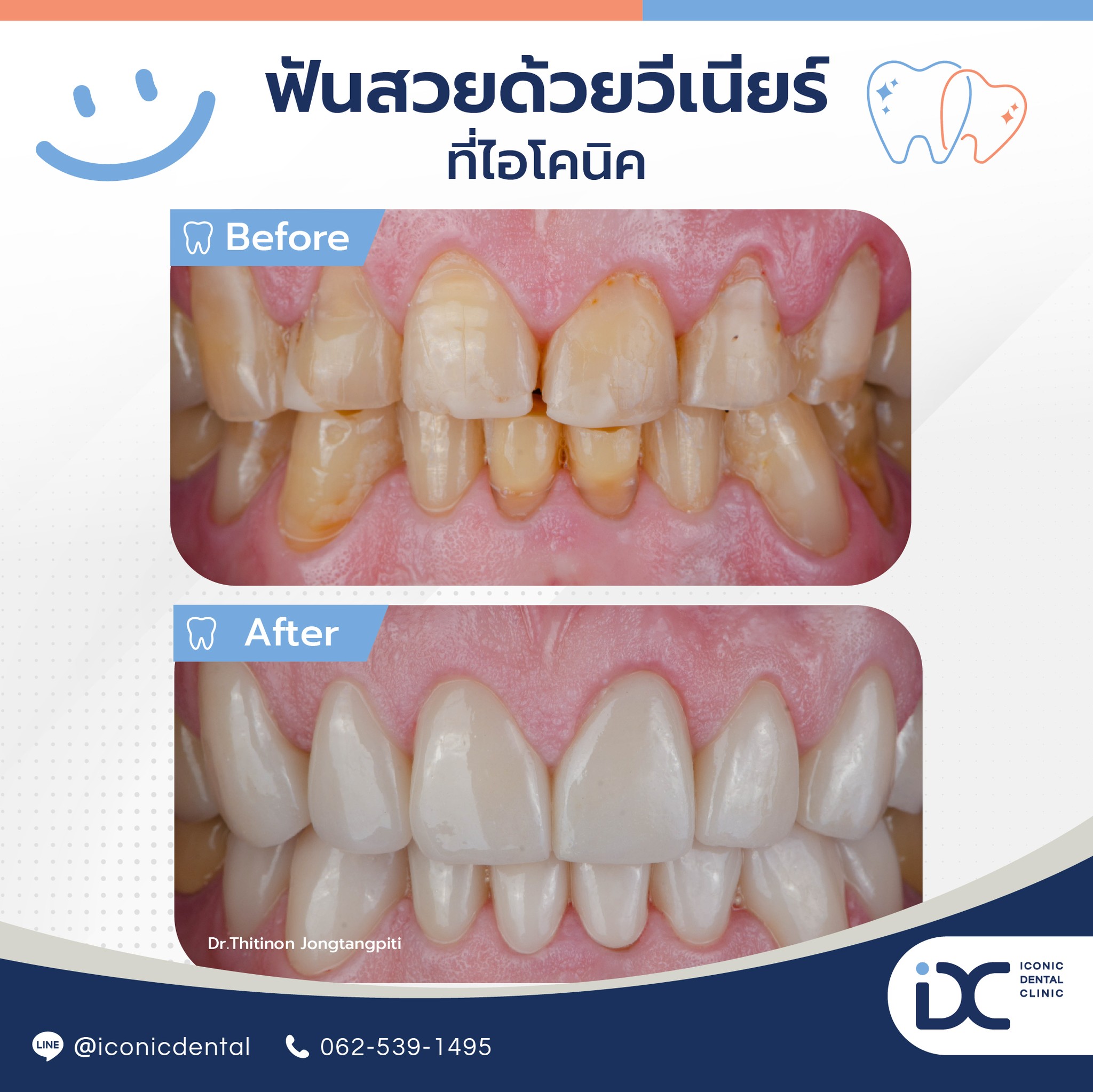
Ceramic Veneers (commonly called Porcelain Veneers) are artificial shells made from Ceramic or Porcelain, materials known for their strength and outstanding beauty. They are thin sheets specifically designed and manufactured in a dental laboratory to fit the size, shape, and color of the patient’s specific tooth before being permanently bonded.
Advantages of Ceramic Veneers:
-
Superior Aesthetics: This is the highlight of ceramic veneers. The material is translucent, glossy, and reflects light almost exactly like natural teeth, making the result look realistic and flawlessly blended.
-
Excellent Stain Resistance: The ceramic surface is smooth and highly resistant to stains from food, drinks, or cigarettes, so the color of the veneer rarely changes even after long-term use.
-
High Durability: Ceramic is much stronger and more wear-resistant than composite resin.
-
Long Lifespan: With their strength and stain resistance, ceramic veneers last longer, averaging 10-15 years or more with proper care.
Considerations for Ceramic Veneers:
-
High Price: Due to high-quality materials and complex lab production, the cost is significantly higher than composite veneers.
-
Takes more time: The process requires at least 2 appointments: one for prep/impressions and another for bonding (waiting 1-2 weeks for lab production).
-
Requires Tooth Grinding (Usually Permanent): Generally, front enamel must be ground down (approx. 0.5-0.7 mm or more) to accommodate the veneer’s thickness. This is an irreversible change.
-
Difficult to repair: If a ceramic veneer cracks or chips, it is difficult or impossible to repair directly; usually, the entire piece must be replaced.
Ceramic Veneer Procedure:
-
Consultation and Planning: Detailed exam, X-rays, or models to plan treatment and select shades.
-
Tooth Preparation: Local anesthesia (if needed) and grinding of the front enamel to the appropriate depth.
-
Impression: Creating a mold or using a digital scanner to record the tooth shape to send to the lab.
-
Temporary Veneers: While waiting for the real veneers, temporary ones may be attached to protect the teeth and maintain aesthetics.
-
Lab Production: Dental technicians create the custom ceramic veneers.
-
Try-in and Bonding: Once the veneers arrive (1-2 weeks), the dentist removes the temporaries, cleans the teeth, and tries on the real veneers to check fit and color. If perfect, they are permanently bonded with special resin cement and light-cured.
-
Final Check: Adjusting the bite and polishing the edges.
Suitability: Ceramic veneers are best for those who:
-
Want maximum aesthetic results and natural appearance.
-
Want durability and a long lifespan.
-
Have sufficient budget for the higher cost.